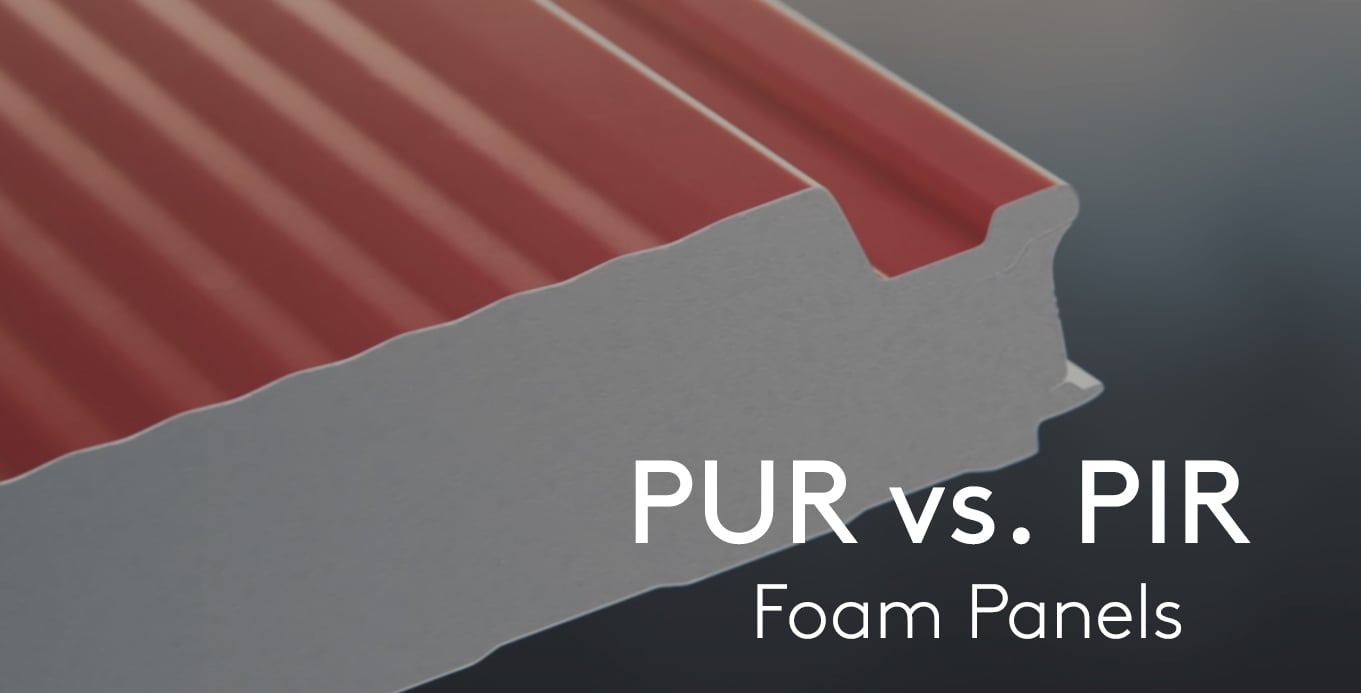
Close relatives share a family history, but rarely have the same personality. Insulation is similar in that PUR and PIR are close in chemical composition but vary in performance. While their composition makes them different, some properties that make them similar are that they both are lightweight with low thermal conductivity, and, therefore, help improve the energy efficiency of buildings by significantly reducing energy needs associated with heating and cooling.
PUR foams are essentially made by reacting a “polyol” component and an “iso” component in which the OH groups of the polyol component chemically balance the NCO groups of the iso component and form urethane linkages. In PIR foams, the iso components react with each other in trimerization reactions to form isocyanurates. Excess iso reacts with polyol to form urethane linkages as well.
The creation of PUR and PIR
PIR and PUR are both derived from polyurethane, a plastic material invented by German scientist Otto Bayer and his colleagues in 1937. In 1954, the accidental introduction of water resulted in rigid polyurethane (PUR).
Just 13 years later in 1967, scientists improved upon PUR’s thermal stability and flame resistance to create polyisocyanurate (PIR). In order to create the new type of insulation, scientists induced a chemical reaction at a higher temperature.
The benefits of PUR
PUR insulation can be injected into wall cavities to create an energy efficient barrier. The foam is able to reach small spaces to create an air-tight seal. According to the Insulation Manufacturer Association, PUR provides “the best thermal performance of all practical full cavity insulants.”
PUR foam can be continuously sprayed onto any type of surface. It is generally less expensive than other materials, making it ideal for renovations.
In flood prone areas, PUR’s high water resistance can minimize the impact of water damage in wall cavities, since it is a material that does not hold moisture.