CLEANsafe 120
CLEANsafe Coatings
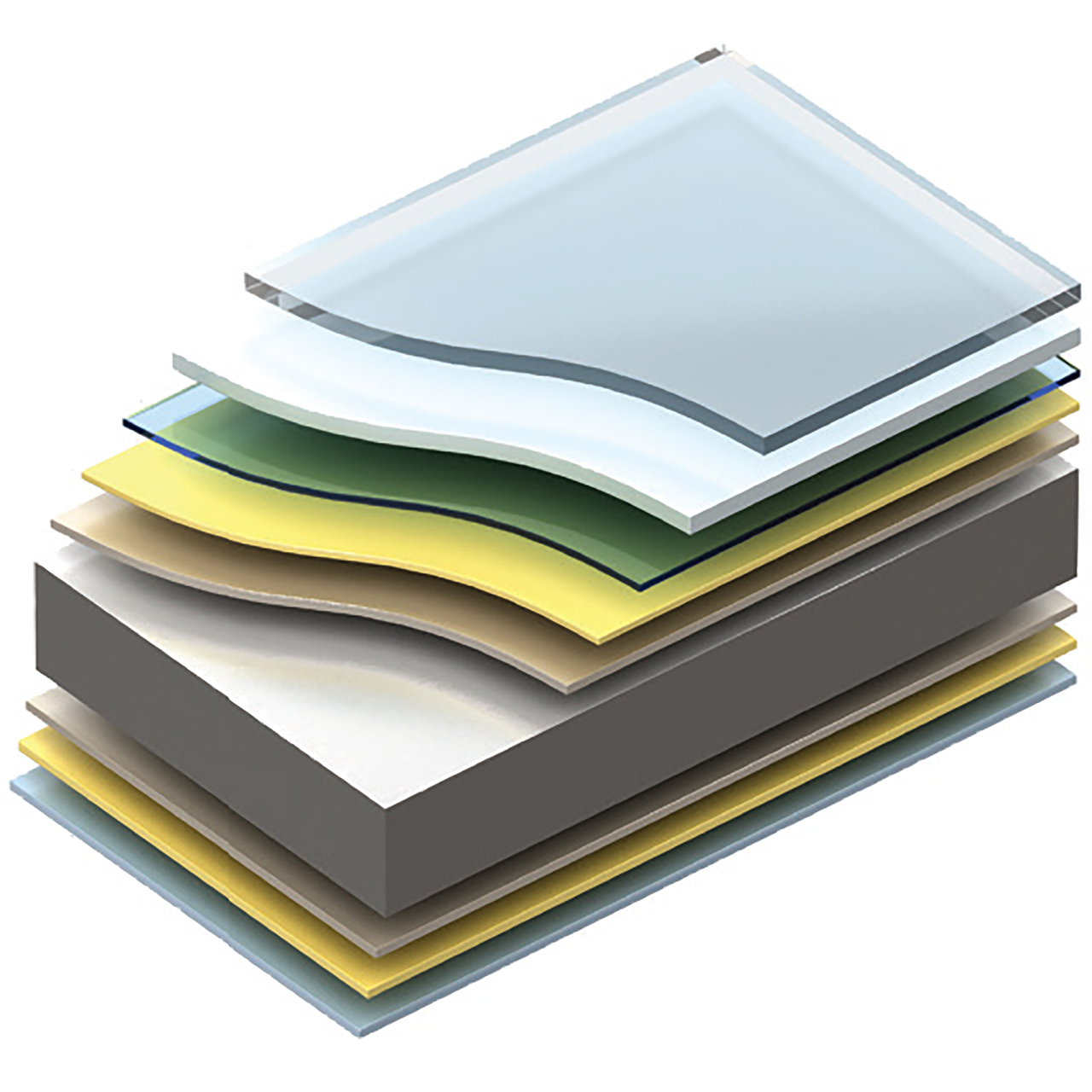
CLEANsafe 120 is a chemically inert polyvinyl chloride (PVC) film, laminated to pre-treated metal, suitable for internal controlled environments.
Product Highlights
- Food safety – suitable for surfaces immediately behind food preparation, processing surfaces or equipment
- Easy to clean & wash down
- Resistant to staining, mold growth and surface extraction
- Excellent chemical and humidity corrosion resistance
- Resistant to impact and surface wear
- Non-toxic
Technical Information
| Test | Norm | Result |
| Coating nominal thickness | -PVC rigid film -Thickness tolerance |
100 m - 200 m ±7% |
| Adhesion afer 6mm drawing depth | ECCA T6 | No film detachment |
| Resistence to bending | ECCA T7[1996] | ½T |
| Resistance to rapid deformation | ASTM D 2794-93; (weight 2kg;height 0f fall 90 cm) |
No detachment and breaking of film |
| Resistance to salt spray fog | ECCA T8:1996-ASTM B117-95 -Cold -rolled support -Hot-dip zinc support |
200 hours 500 hours |
| Resistance to 100% relative humidity | ASTM D 2247-94 | 1000 hours |
| Pencil hardness | ECCA T4:1995 -ASTM D 3363-920 | HB |
| Stain resistance after 16 h - Reagents |
ECCA T18[1995] proc. 5.1-ASTM D 1308-87 Butter, margarine, vegetable oil, vinegar, fresh and conserved tomato, strawberries, coffe, tea, solution at 5% of NaoH, solution at 5% of surface active agents, lubricating oil and grease, solution at 10% of citric,lactic and tartaric acid ,oleic acid,spinach, lemon juice, mustard, cif cream, cif liquid, lysoform liquid |
Presence of marks or stains on the area in contact with fresh tomato and coffee |
| Brightness at 60 | ECCA T2[1995]-ASTM D 523-89 Finishing SA Finishing SMA Finishing GMA Finishing PVA |
45 ± 5 25 ± 5 15 ± 5 30 ± 5 |
| Note: glass value may be affected by embossing degree | ||
| Artificial light fastness -temperatue -lamps -cycle -referance |
ASTM G53-96 55+_ 3 UV-A 340 Irradiance only international blue scale |
>6 |
| Taber abrasion resistance -index of abrasion after 1000 cycles with mole type CS10,weight 500g per mole |
ASTM D4060-95 Finishing SA Finishing SMA Finishing PVA |
13 -14 10-12 5 -8 |
| Note:the tests were carried out at the temperature of 23+_1 C,beyond what was expressely required by reference norms |
Standard metal support
- Continuously hot-dip zinc coated low carbon for cold forming,
type DX51D (UNI EN 10346:June 2009).
Other available metal supports
- Stainless steel - Part 1. List of the stainless steels (UNI EN 10088-1/97).
Coating
Anti-Bacterial, rigid polyvinylchloride (PVC) phthalates free. This film is suitable for contact with food and substances for personal use according to the Ministerial Decree 21st March 1973 and subsequent updatings and to the European Standards 78/142/CEE, 80/766/CEE, 82/711/CEE, 8 5/572/CEE, 90/128/CEE, 92/39CEE. This film is suitable for contact with food and substances for personal use according to the Ministerial Decree 21st March 1973 and subsequent updatings and to the European Standards 78/142/CEE, 80/766/CEE, 82/711/CEE, 85/572/CEE, 90/128/CEE, 92/39 CEE.
Similar Products
Frequently Asked Questions
Panels with Kingspan CLEANsafe 120 coatings, both sheets and coils, must be stored in a and dry place, without sudden changes of temperature, in order to avoid the possibility of condensation. The presence of humidity may trigger a corrosion process dangerous for steel and its coating, but also for the adhesion of polyurethane. Material covered with the adhesive film for temporary protection must be stored away from heat sources and UV rays.
To repair or paint the surfaces coated with PVC film, we recommend to use the following products:
- Water based acrylic enamels (for repairing or painting).
- Bi-component polyurethane enamels with volatile solvents (for repairing).
Before applying the enamel, clean the surfaces with neutral detergents diluted with water or denatured alcohol, then rinse with soft water and dry accurately.
We recommend cleaning with soft water and neutral detergents, rinsing with care and drying the surface with a soft cloth. Please avoid the use of abrasive products.
Small stains on the surface can be removed with mineral spirit or rubbing alcohol. Stains caused by the substances absorption (such as nail varnish, lipstick, shoe polish, ink, tar) cannot be eliminated.
Talk to Us
What can we help you with?